Commentary: Teachers who complain about burnout are not bad teachers
SINGAPORE: Singapore workers are no strangers to burnout. After all, we live and work in the second well-nigh overworked metropolis.
A worrying spotlight was recently shone on burnout amid teachers. In a Ministry of Didactics (MOE) engagement survey conducted in June, 3 in 10 teachers said they could not cope with stress at piece of work.
Many of us accept family or friends in the instruction profession. While it is not uncommon to hear of their challenges and high workload, some report experiencing panic attacks, emotional breakdowns or feeling like they have nothing to contribute. I instructor nosotros know eventually chose to quit to protect their mental wellness.
WHY ARE TEACHERS SO BURNT OUT?
Exhaustion has been studied for decades in psychology. It is a response to cumulative, prolonged and sustained stress, not the "usual" episodic stress nosotros may feel before an of import exam or job interview.
It has 3 singled-out components: Initial feelings of being emotionally and mentally tuckered, followed past cynicism nigh the significant of i'south work and an overwhelming sense of inadequacy.
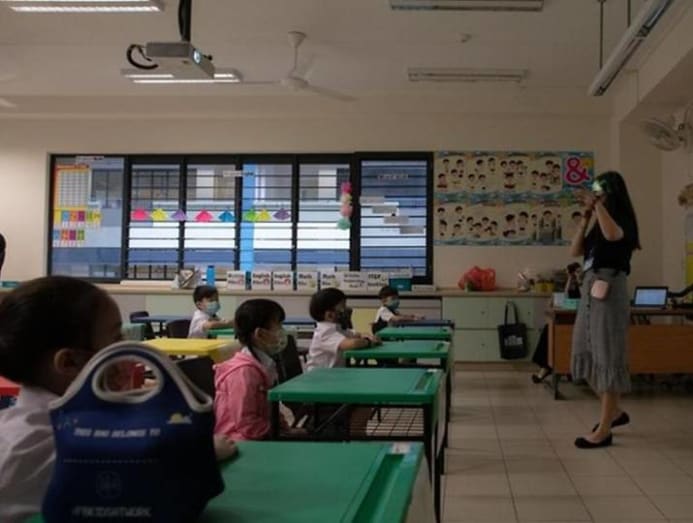
Chore demands on teachers have increased dramatically. According to one retired teacher, heading home by 3pm was the norm 25 years ago.
According to the Organisation for Economic Cooperation and Development (OECD), Singapore teachers reported working 46 hours per week on average in 2022 – or seven hours more the OECD average.
Work doesn't unremarkably stop when they become home, with assignments to form and the adjacent solar day's lessons to prepare.
Teachers also have to program events, organise co-curricular activities, discipline and counsel students, provide "customer service" to parents or in some cases, act as "surrogate parents".
Amidst the COVID-19 situation, teachers take besides stepped into roles of mental health counsellors, safety distancing ambassadors and multimedia content creators for habitation-based learning.
That said, a demanding job alone does not lead to burnout, though its effects are often worsened past the lack of resources to cope.
2 key complaints from teachers have been the expectation that they should cope with stress on their ain and the feeling that they take been "exploited for their passion", later on experiencing schoolhouse leaders dismiss their concerns and attribute these as a result of bad fourth dimension management or a lack of job commitment.
ONUS OF MANAGING BURNOUT Not SOLELY ON TEACHERS
A well-studied phenomenon in psychology is the "fundamental attribution error", where we over-aspect behaviours or outcomes to the person rather than the state of affairs.
At that place is a natural tendency to assume teachers aren't coping considering they don't plan their time well or are not "mentally tough plenty".
We oftentimes have high expectations for teachers to just grin and carry with job demands "for the students".
Only only as safe bands don't snap on their own unless overstretched, teachers practice not just "snap" unless situational demands place an unreasonable toll on them. Bold teachers can cope past themselves may send them down the spiral of cocky-blame and worsening mental health.
Where burnout is due to a lack of resources, providing support and skills to balance task demands will help to shore up resilience.
This can include meliorate assist and grooming to lower the barriers for remote teaching while teachers build upward necessary skills and confidence.
Class sizes could be reduced if at that place are enough teachers to go around. According to MOE, the average primary and secondary school class size was 33 in 2019, compared to the OECD boilerplate of 21 for primary and 23 for lower secondary levels in 2018.
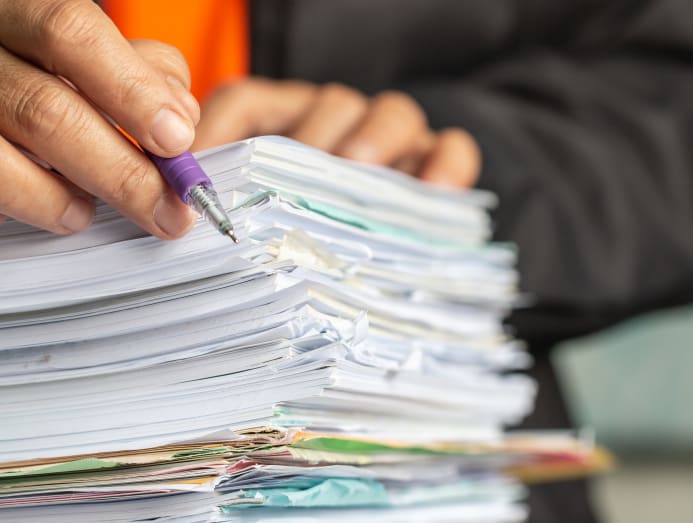
Non-education tasks can be minimised or outsourced. Research shows that work tasks perceived as unnecessary or outside of a chore scope tin reduce the sense of living a calling and increase stress.
Teachers can likewise be given more space to do their jobs or participate in areas of involvement at schoolhouse. We know having a sense of autonomy can protect confronting burnout, as more than control means employees can better manage their workload and pursue tasks that add meaning to work.
Where burnout is an issue of insufficient mental wellness support, resources and counsellors should be as accessible to teachers as they are to students. While this may non translate to improvements in workload, counselling may help teachers pinpoint bug causing asymmetric stress and discover ameliorate ways to cope.
THE ROLE OF SUPERVISORS AND School LEADERS
What is the office that department heads, vice-principals and principals should play? In whatsoever work environment, managers should provide psychological safety for employees to voice their struggles.
Schoolhouse leaders could do better in creating rubber spaces where teachers tin can communicate challenges and seek help. These in turn tin can provide valuable feedback on morale and promote a supportive work civilization.
Concerns that validating the feel of stress could intensify negative work sentiments can be problematic. We are much better at problem-solving when the problem is not us.
One cadre principle worth keeping in mind when supporting our teachers should be: "The person is not the problem, the problem is the problem."
We should non underestimate the touch of showing empathy, acknowledging teachers' burden, validating emotions and providing the mental space they demand.
Psychology besides tells us people adopt relationships that are roughly equal in costs and rewards. Teachers, like whatever other professionals, look to exist rewarded commensurate to the time and energy devoted to students.
While ultimately MOE has the key role in shaping policy, particularly in performance management and career progression, school leaders should await into providing more recognition and social rewards - in giving credit where it is due and showing that hard work has been recognised and is appreciated.
To do then, school leaders need to be on the ground and have a keen impartial view of teachers' efforts.
When necessary, supervisors should negotiate with school leaders to adjust expectations or manpower support. Merely where modify is not immediately possible, supervisors should still endeavour to provide some assistance on their end and check in frequently with how teachers are coping.
Mental health has get a key issue in Singapore schools since the River Valley High School incident only do the measures arrive enough? We hear from a parent, a counsellor and Government minister of State for Education Sun Xueling on CNA's Centre of the Thing:
Work IS A MEANS TO AN Finish, Fifty-fifty FOR TEACHERS
This is not to say that empathy and kind words alone are sufficient to address burnout amid teachers. Addressing the root cause of the problem would require schoolhouse leaders to be office of the solution and champion for more structural changes to ameliorate the workplace.
Work is a means to an terminate, be it altruistic ones similar nurturing the side by side generation or personal ones such as providing for their family unit.
Teachers who complain well-nigh burnout or stress are non bad teachers. On the contrary, many of them get stressed considering they care. So when they quit, schools and students are worse off for it.
Let'south non make teachers cull between their own well-beingness and caring for students.
Tang Bek Wuay is a PhD candidate in psychology and Jacinth Tan is an assistant professor of psychology in the School of Social Sciences, Singapore Management Academy.
rosenbergcomicaret1976.blogspot.com
Source: https://cnalifestyle.channelnewsasia.com/commentary/teachers-complain-burnout-stress-school-leaders-285776

Post a Comment for "Commentary: Teachers who complain about burnout are not bad teachers"